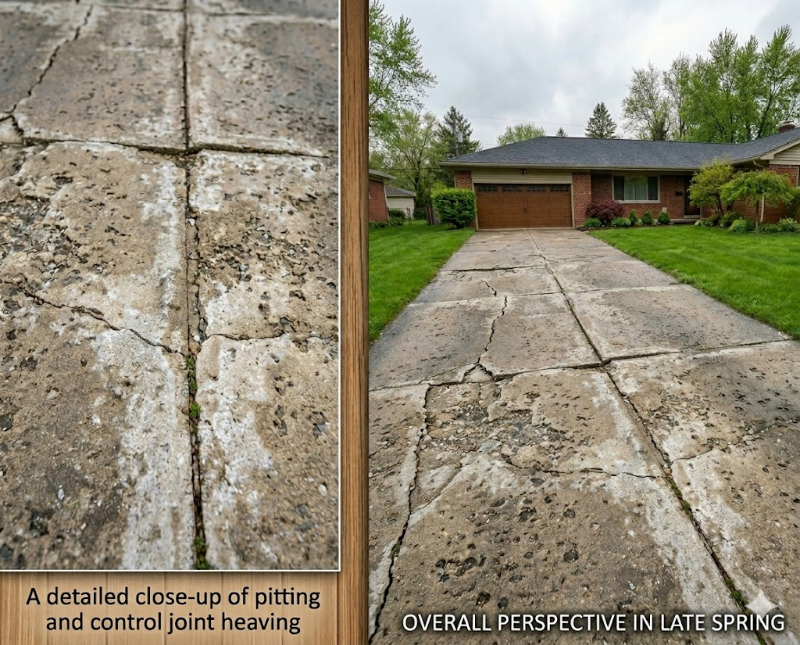
Every Michigan driveway gets tested by winter. The freeze-thaw cycle, the road salt, the weight of vehicles on a surface that has expanded and contracted hundreds of times — it all adds up. Most driveways handle it for 20 or 30 years before the damage becomes undeniable. But when the tipping point comes, it comes fast. What looked like minor cracking in March can look like a disaster by April.
Flat Rock Concrete Construction works with homeowners throughout Utica and Sterling Heights who are facing the same decision: patch it one more time, or replace it now and be done with it. This guide will help you read the signs honestly so you can make the right call for your property.
The Honest Truth About Driveway Patching
Concrete patching products have improved significantly over the years. The right patch, applied correctly, can extend the life of a driveway by several years. But there is a threshold beyond which patching is not a solution — it is procrastination with a price tag.
When cracking is isolated to one or two small areas and the sub-base is sound, patching makes sense. When cracking is widespread, when sections have shifted relative to each other, when the surface is spalling across large areas — patching is putting a bandage on a structural problem. You will spend money on the patch, and then spend more on a replacement within a few years anyway.
The question to ask is not whether this can be patched, but whether it should be patched. Those are different questions. A good concrete contractor will be honest with you about which category your driveway falls into.
Warning Sign #1: Map Cracking or Alligator Cracking
Normal concrete driveways develop occasional cracks over time, particularly at control joints. That is expected and manageable. What is not manageable is map cracking — a pattern of cracks that spread across the surface in all directions, resembling the lines on a road map or the pattern of alligator skin.
Map cracking typically indicates one of two things: the concrete has reached the end of its structural life and is beginning to break down at a fundamental level, or the sub-base beneath the slab has eroded or shifted, leaving sections of concrete unsupported. Either way, no patch addresses the underlying cause. The cracking will continue regardless of what you apply to the surface.
Warning Sign #2: Surface Spalling
Spalling is the term for the process in which the top layer of concrete begins to flake, pit, or pop off. It usually starts as small pockmarks across the surface and progressively worsens until large sections of the surface layer have delaminated from the slab beneath.
In Michigan, spalling is almost always caused by the combination of freeze-thaw cycling and road salt. Deicing chemicals — particularly rock salt — work by lowering the freezing point of water, but they also increase the number of freeze-thaw cycles the concrete surface experiences during a winter season. This accelerates the breakdown of the cement paste that holds the surface together.
Light, early-stage spalling can sometimes be addressed with a concrete resurfacer. But once spalling is widespread and the aggregate beneath the surface layer is visibly exposed, the driveway has lost its protective surface permanently. At that point, deterioration accelerates. Another Michigan winter will make it significantly worse.
Warning Sign #3: Heaving and Settling
If sections of your Utica or Sterling Heights driveway have risen or sunk relative to the sections around them, you have a sub-base problem. When the ground beneath concrete freezes, it expands. When it thaws, it contracts. Over years of cycling, sections of the sub-base can shift, erode, or compact unevenly — leaving the concrete slab above them with no support in some areas and upward pressure in others.
A heaved section is a trip hazard and a risk of vehicle damage. More importantly, it tells you the sub-base integrity has been compromised. Replacing just the surface slab without rebuilding the sub-base correctly would repeat the same problem within years. A proper replacement addresses both the concrete and the ground beneath it.
Warning Sign #4: Drainage Problems
A properly installed driveway has a slight slope — typically a quarter inch of fall per foot of run — that directs water toward the street rather than toward your home’s foundation. When a driveway settles unevenly or develops low spots, water begins to pond on the surface instead of running off.
Standing water on a concrete driveway significantly accelerates deterioration. Water seeps into existing cracks, freezes, expands, and widens them further. Water that reaches the sub-base can erode it or cause frost heave. And water that pools near your foundation is a foundation drainage problem waiting to happen.
If you notice water pooling in the center of your driveway or near your garage apron after a rainstorm, that is a structural issue — not a surface issue — and it will not fix itself.
Warning Sign #5: Age
A quality concrete driveway, properly installed and maintained, should last 30 to 50 years in Michigan. But that range comes with a caveat: the upper end of that range requires a good installation to begin with, proper maintenance including sealing, and reasonable use. Many driveways installed in Utica and Sterling Heights during the 1980s and early 1990s did not benefit from the concrete mixes and installation practices that are standard today.
If your driveway is more than 30 years old and showing any of the warning signs above, it has done its job. The question is not whether it will eventually need replacement — it is whether you want to replace it on your timeline or wait until the damage becomes severe enough to create a safety hazard.
Why Act Before Summer?
Late spring is one of the two best times of year to pour concrete in Michigan. Temperatures are in the ideal range, the ground has dried from spring thaw, and contractors’ schedules are not yet packed with summer backlog. Homeowners who call in May or early June get better scheduling and better curing conditions than those who wait until July.
Flat Rock Concrete Construction serves Utica, Sterling Heights, and surrounding communities throughout Macomb and Oakland Counties. If your driveway is showing any of the warning signs described above, give us a call. We will come out, take an honest look, and tell you exactly what your driveway needs — whether that is a targeted repair or a full replacement. Contact us today for a free estimate.